


Let’s ‘Play to Learn’
Encourage the children to explore:
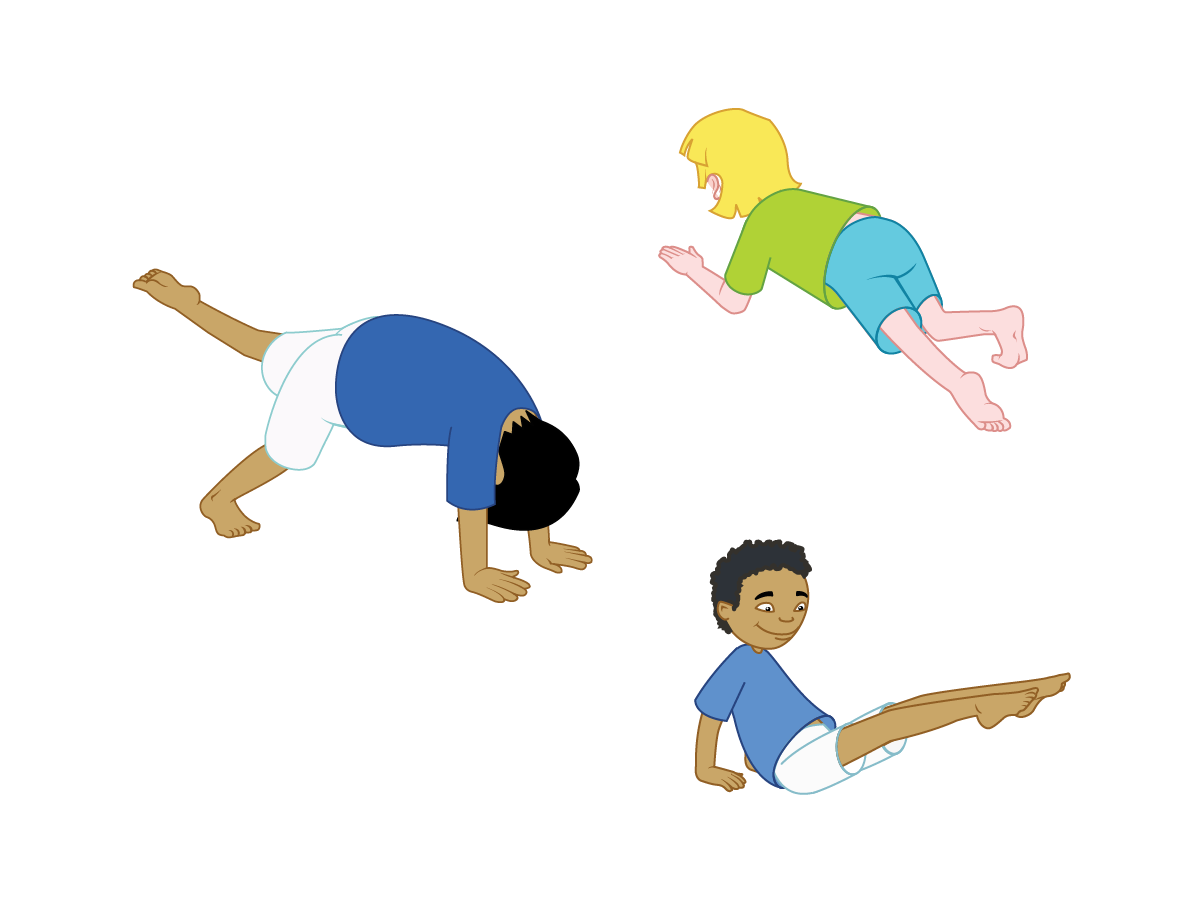
- Holding a balance with various body parts touching the floor
- Showing various body shapes whilst holding a balance
- Holding inverted balances where their head is lower than their bottom
- Holding the balance for at least the count of “one banana, two banana, three banana”
- Taking photographs of their favourite balances, using these to help them create a series of three balances
Safety & Organisation
Ensure:
- the surface is clean and free from obstructions
- children work in their ‘bubbles’
Opportunities to
- develop increasing control over large body movements
- recognise and name different body parts
- show improved balance and co-ordination
Questions
- What shapes can you make when you are balancing on your tummy?
- How can you make your leg straight when you do that?
- What other large patches can you balance on?
- How do you feel when your head is lower than your bottom?
- Which is your favourite balance and what do you like about it?
Can you see the child?
- Developing increasing control over large body movements
- Recognising and naming different body parts
- Showing improved balance and co-ordination
-
Most of the time
Encourage the child to:
- perform specific shapes/balances – Angry Cat, Straight Shape, Star Shape, Balance on one foot – refer to Technical Skills Cards for further information
- play ‘Simon says’
- describe a balance for another child to attempt using positional language
-
Sometimes
Encourage the child to:
- concentrate on one balance at a time
- sing action songs that help name body parts
- copy another child or a practitioner
- discuss which balances might be easier to hold and on which body parts might be the best to balance
- work with another child to help one another