


Free Spots
As we apply our skills
Activity
Physical Activity Provider Card
Let's Play
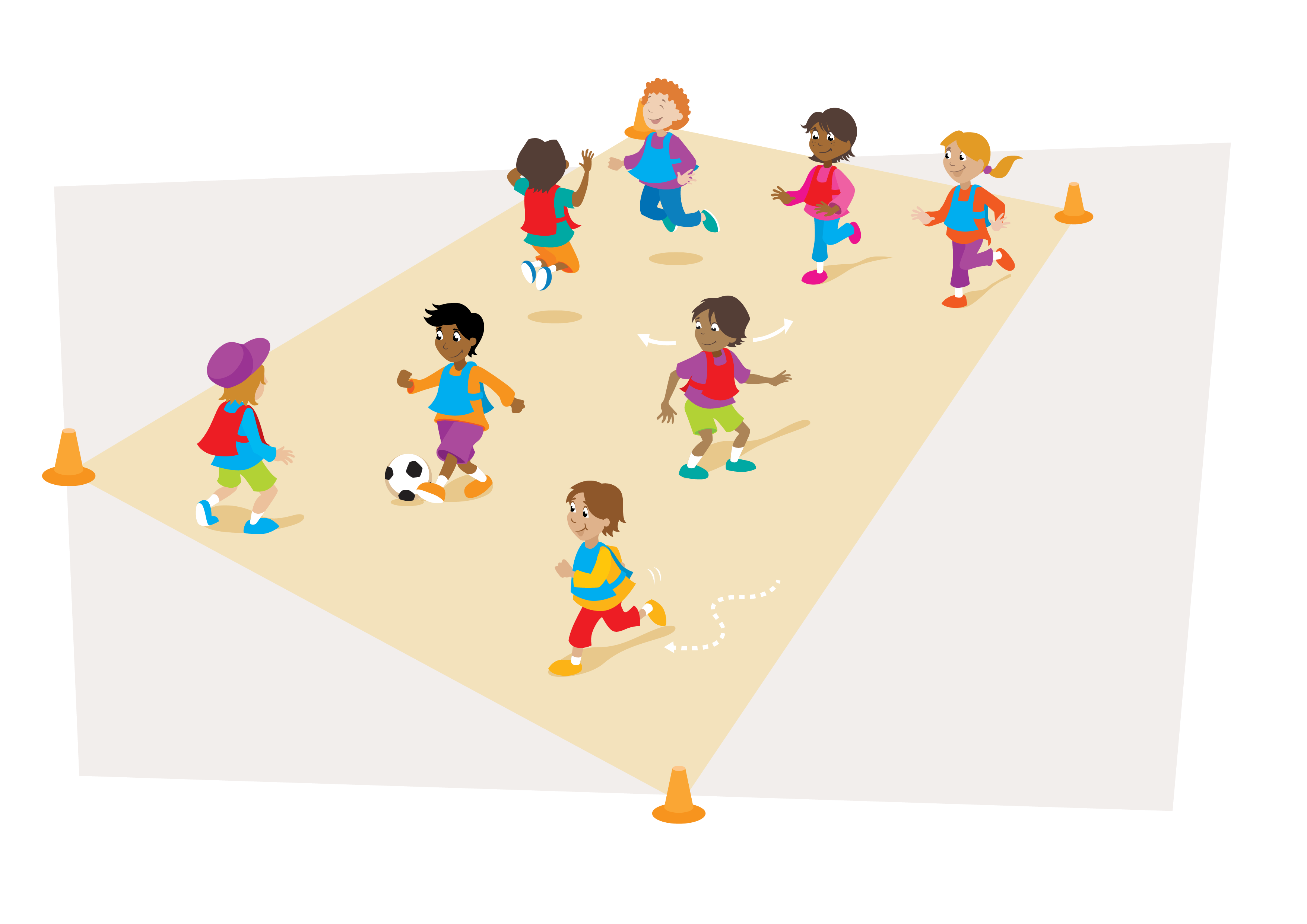
- Eight children in each garden, four with blue bibs and four with red bibs
- Children take it in turns to be the ‘spotter’
- All the children move around the garden on a command/signal/cue, the other children pair up – one blue bib with one red bib and keep moving around the space
- The spotter has to get to the ‘free’ child as quickly as possible
- Swap the ‘spotter’ after several turns
- Children decide how they are going to move around the space, what they do when they join together in pairs and what the spotter must do to get the ‘free’ child
Safety & Organisation
Ensure:
- the surface is safe and free from obstructions
- children agree signals/cues/commands and who will make them before they start
- children use their dodging skills to avoid bumping into anyone
- there are zones for wheelchair/frame users as appropriate
Opportunities to
- develop agility, coordination, spatial awareness, peripheral vision
- show improved coordination and control
- take more responsibility for their own actions and begin to understand the associated risks
- begin to develop an increasing variety of imaginative ideas
Questions
- How did you make sure you did not bump into anyone?
- How quickly were you able to get to the ‘free’ child?
- How could you improve your movement to the free child?
- What skills are you going to practise to improve at this activity?
- How can you make it more difficult for the spotter?
- What other skills could you use in this activity?
Changes to the activity
Change the:
-
Space
- more space requires stamina and pacing, less space requires more dodging and better spatial awareness
-
Task
- activity prior to command/signal/cue, e.g. use football skills, tennis skills, etc. – spotter could be passive or active doing something else, e.g. juggling, jumping over a line, etc.
- activity after the command/signal/cue, e.g. skipping, sidestepping
- command/signal/cue – make them more complicated
- way the ‘spotter’ gets to the ‘free’ child, e.g. following a certain path or series of colour spots, etc.
-
Equipment
- equipment everyone has, e.g. all the same, some different, spotter must not only get to the free child as quickly as they can, they must also collect the appropriate piece of equipment
- use apparatus and equipment as obstacles that are either ‘safe’ or ‘no go’ areas
-
People
- way the others perform to find the ‘odd one out’ rather than the ‘free’ child – the Spotter to spot the difference and quickly identify which child is doing something different to the rest and get to that child as quickly as possible, e.g. the free child skips, the others all side step – this activity could be against the clock