


Tag Team Tennis
As we apply our skills
Activity
Physical Activity Provider Card

Let's Play
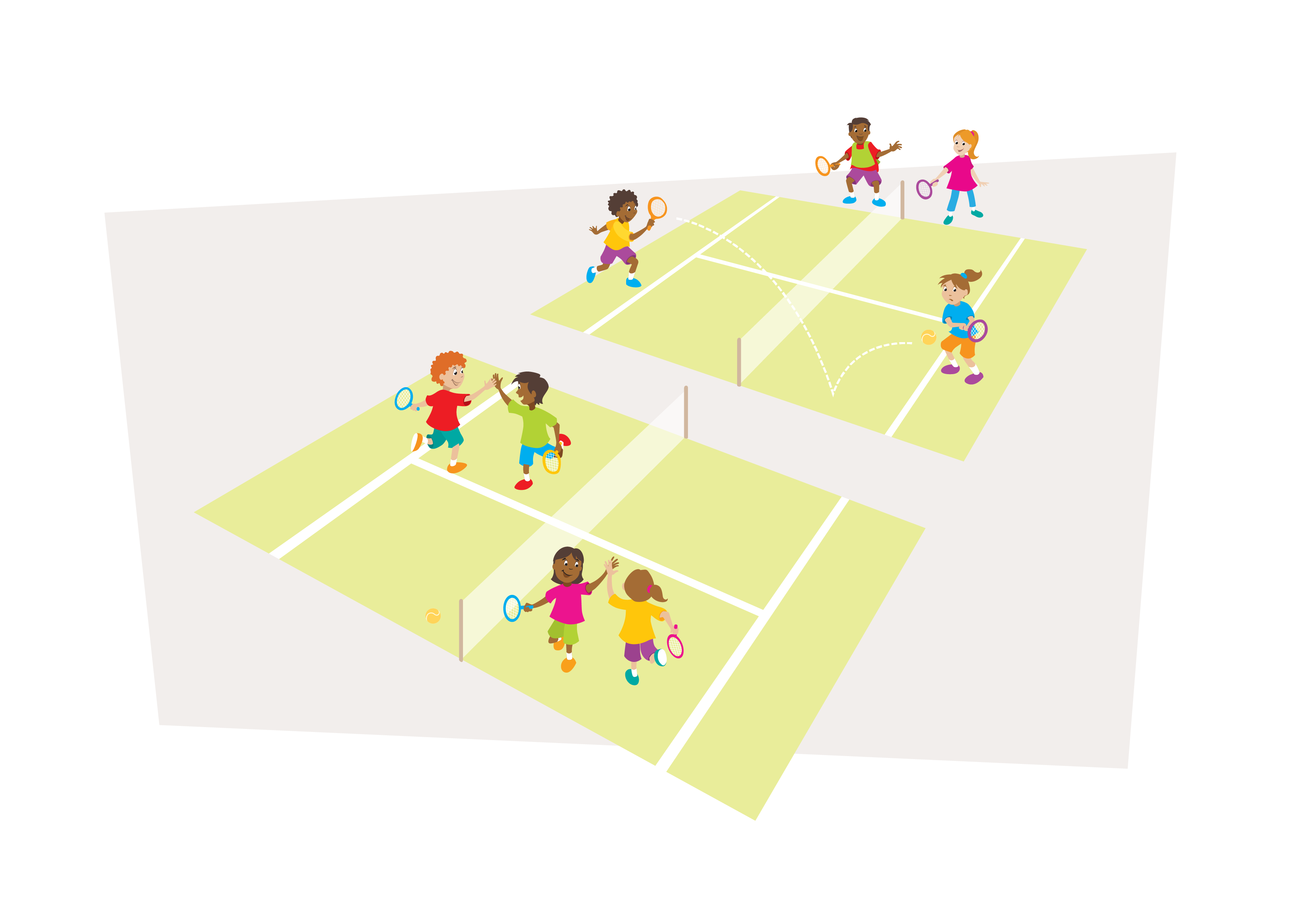
- Two teams of two
- Make a garden using markers or lines that is separated by a barrier or ‘no go’ gap
- Start with two children (one from each team) with the other children scoring
- The first team to score 10 points wins
- At the side of the court put a row of 10 cones to help keep score (turn over when a team has won the point)
- Stop at the end of each point and agree the score before the next point
- After every 4 points both children are ‘tagged’ (replaced) by their teammate and play continues – the scoring is continuous
- Once a team has reached 10 points, shake hands with your opponents
- Decide how to rotate the teams to play as many teams as possible
Safety & Organisation
Ensure:
- surface is safe and free from obstructions
- large runoff areas in between ‘gardens’
Opportunities to
- improve hand–eye co-ordination
- develop strategies and tactics to outwit opponents
- identify what makes a skill, idea or action successful and make simple judgements about their own and others’ performance – use this information to plan how to improve
- co-operate with others to observe the conventions of fair play
Questions
- Why is it important to keep the score accurately?
- How did you remember which side to serve from?
- What skills do you need to be good at to play this activity?
- What are you going to practise to help you improve?
- Why are fast feet important in this game?
- What would you like to do better next time?
- How can you win points in this game?
- Where is the best place to put the ball?
Changes to the activity
Change the:
-
Space
- size of the zones – bigger or smaller or unequal sizes, long and thin, short and wide, etc.
-
Task
- rules – number of bounces particularly for children with limited mobility or wheelchair users, ways of serving, conditions about what you do once you have played the ball – out around a cone, sit down, etc.
-
Equipment
- different sizes and speeds of balls – introduce rackets, higher nets or wider gaps
-
People
- number of players on each side of the net/gap – join two courts together to play 2v2 with an umpire and/or coach