


Let’s ‘Play to Learn’
- Play a particular accompaniment to stimulate children’s movement responses
- Encourage children to use more difficult skills in their dances, e.g. skipping, leaping, etc.
- Encourage children to practise their dances
- Explore moods and feelings using simple movements
- Explore creating longer, more interesting phrases with defined start and finish positions that communicate a specific aspect of the story
- Explore changes in dynamics, e.g. strong/weak, fast/slow, smooth/jerky, big/small, etc.
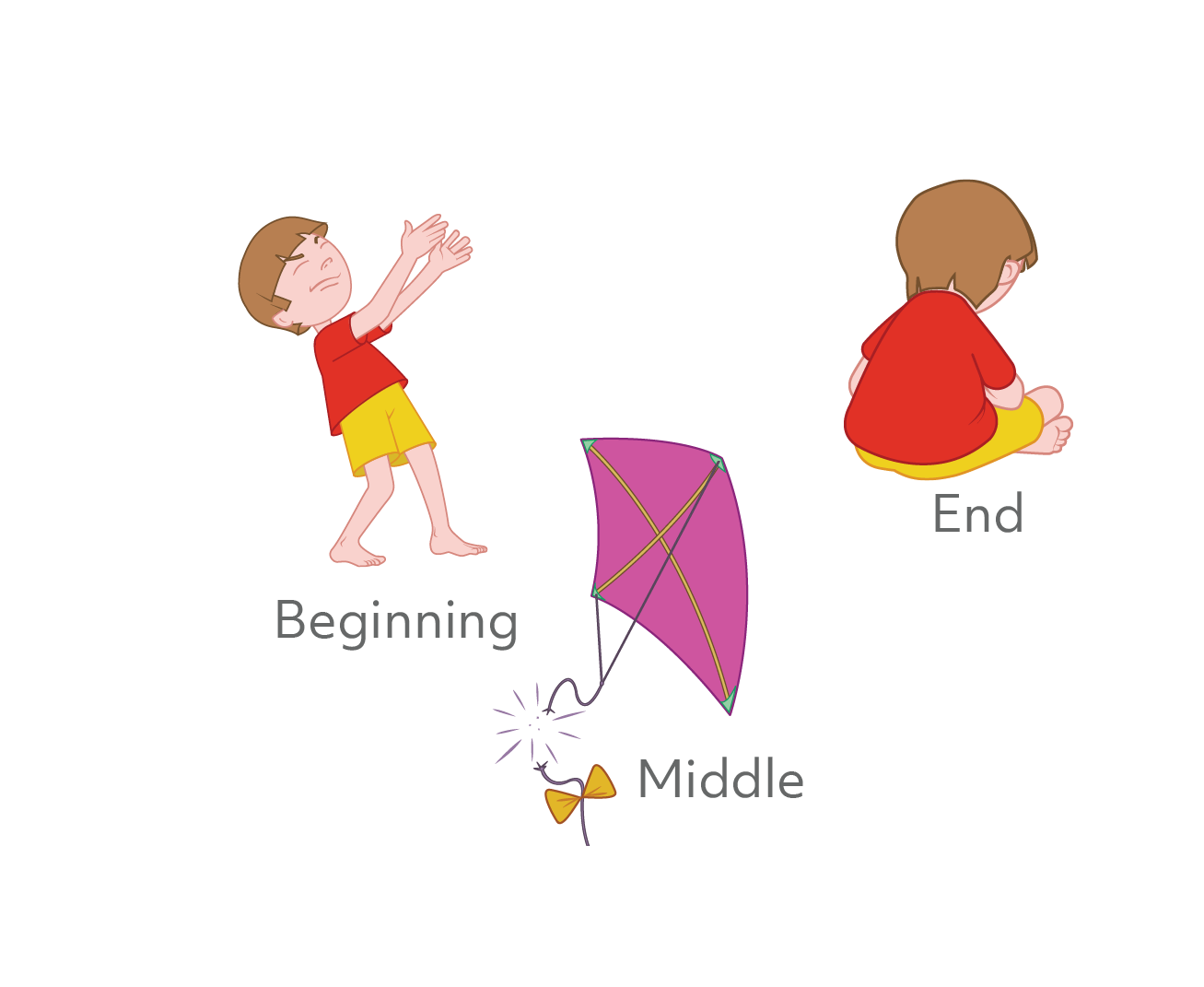
- Use the Story Board Approach to join short movement phrases together to create a dance with a beginning, middle and end
- Explore an ending to the dance, e.g. caught in the rocks, blown out to sea, back to earth with a bang, etc.
Safety & Organisation
Ensure:
- the surface is clean and free from obstructions
- children work in their ‘bubbles’
Opportunities to
- express ideas through a range of movements
- link a series of actions together with some fluency to create a dance phrase including moments of stillness and gesture to enhance expression
- repeat phrases
Questions
- Which of the basic dance actions do you think best fits this part of the dance?
- How can you travel and gesture at the same time?
- How can you use gesture and stillness to enhance your expression?
- How can you change that phrase, e.g. by repeating it at a different speed?
Can you see the child?
- Expressing ideas through a range of movements
- Linking a series of actions together with some fluency to create a dance phrase including moments of stillness and gesture to enhance expression
- Repeating phrases
-
Most of the time
Encourage the child to:
- make each section longer or more interesting by adding more actions or including changes in direction, level, speed, pathway, etc.
- repeat each section with clear starting and finishing positions
- listen and respond appropriately to the accompaniment
- dance with a partner using follow the leader (both as the kite, or one child as the kite and one as Tom, etc.)
- discuss the quality of their movements, e.g. how can they show the difference between flying and leaping?
-
Sometimes
Encourage the child to:
- use pictures from the story to sequence or storyboard to help create a phrase/motif/sequence
- discuss which ideas/words/pictures from the story they would like to include as either moments of stillness or gesture – work on these and develop travelling actions to link them together
- develop a ‘move cube’ so they select a variety of different words they like – the child then uses the cube to help sequence their actions
- watch other children’s dances – ask them to choose movements they like which they can include in their phrase
- discuss which words they would like to express/communicate and what actions they could use to show these
- say the word to themselves in English and in Welsh as they move