


Patterns and Pathways
As we apply our skills
Activity
Physical Activity Provider Card
Let's Play
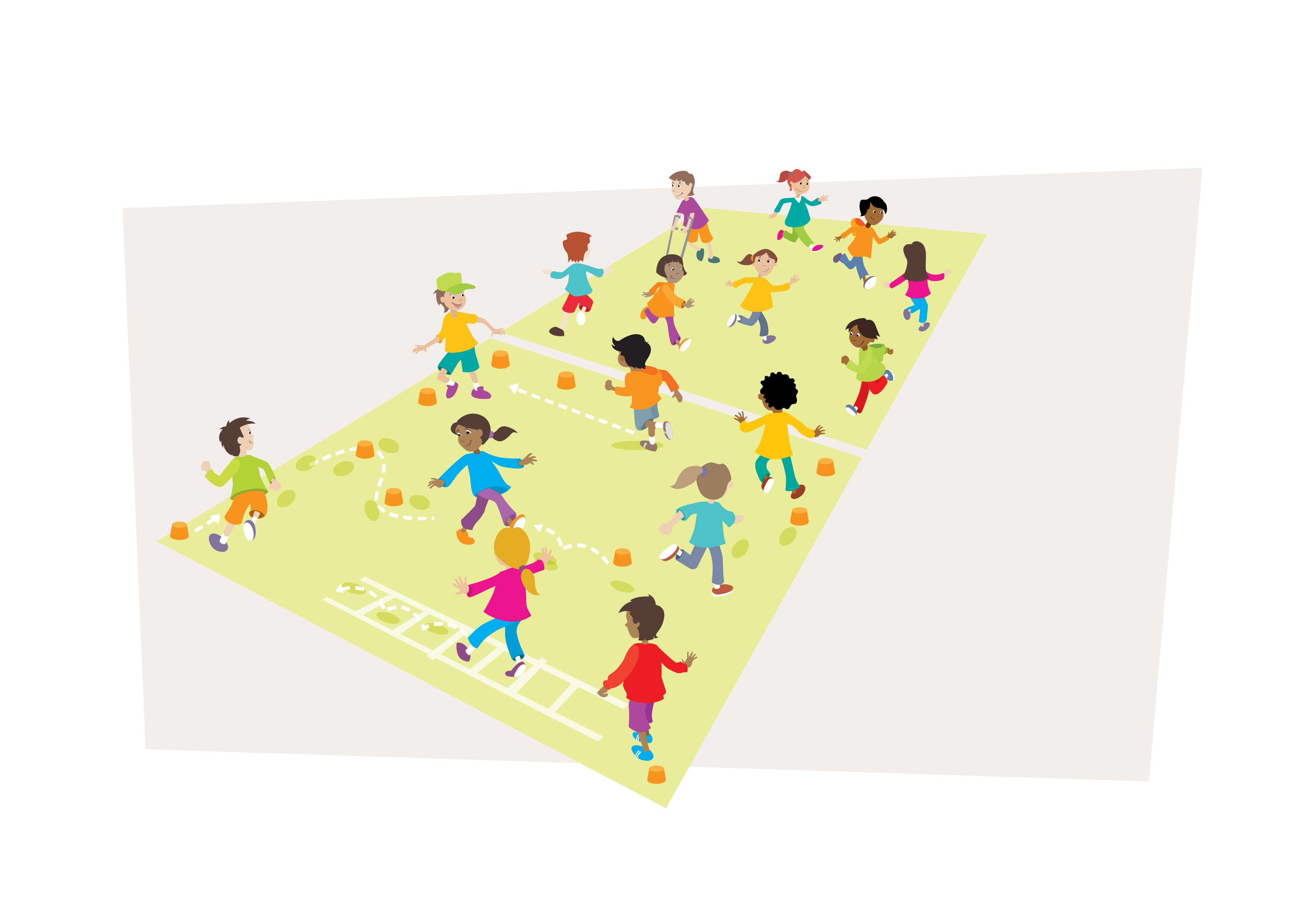
- Eight children in each ‘garden’.
- Work together to make a series patterns and pathways on the floor that they have to follow.
- Patterns/pathways made using throw-down markers, chalk, cones or skipping ropes, ladders, etc.
- Patterns are for specific foot patterns, for example 2 on/in, 2 off/out. Pathways are for routes to be followed no matter what foot pattern is used, e.g. figure of 8, letter ‘W’, slalom course, bends and straights, etc.
- Aim to complete the course as quickly as possible and as accurately as possible.
Safety & Organisation
Ensure:
- surface is safe and free from obstructions
- the children stay within their ‘garden’
- large runoff areas in between ‘gardens’
- zones for less ambulant or wheelchair users as appropriate
- high-contrast markers for visually impaired
Opportunities to
- develop ‘fast feet’
- develop agility, balance, co-ordination
- develop speed and stamina
- show improved co-ordination and control across a range of activities
- sustain activity over appropriate periods of time
- describe how they feel doing different activities and show some understanding of the importance of physical activity to health, fitness and well-being
Questions
- What did you think about to help you do this activity quickly?
– What else could you think about to help you next time? - Which was the hardest section to do?
- Which skills are you going to practise to help you go faster next time?
- Why are activities like these important to your health?
Changes to the activity
Change the:
-
Space
- pathways – easier / more complex, shorter/longer, bigger/smaller, etc.
-
Task
- patterns – easier / more complex, shorter/longer.
- way of travelling, e.g. backwards, sideways, etc. or add in a ball to dribble with hands, feet or with a ball and stick, etc. Use markers/cones as visual cues to slow down, speed up, backwards, dribble, etc.
- activities in the course so have to do other things like hold balances, score goals, do maths calculations, spell words, complete puzzles, etc. Think ‘Biathlon’ – fast long cross-country skiing then aiming/concentration activity.
-
Equipment
- vary the equipment used
-
People
- way the course is completed, e.g. work in pairs, one behind the other, or mirroring; consider using music
- leader – take turns to teach or coach someone else and help them improve